As news emerges of sewage emerging into San Pablo Bay, it is only highlights how little we Bay Area watermen and -women know about the waste that might reside in our water. That was the question that motivated my recent visit to San Francisco’s wastewater treatment plant, 11 miles south of the spill and opposite the most popular surf break on Ocean Beach.
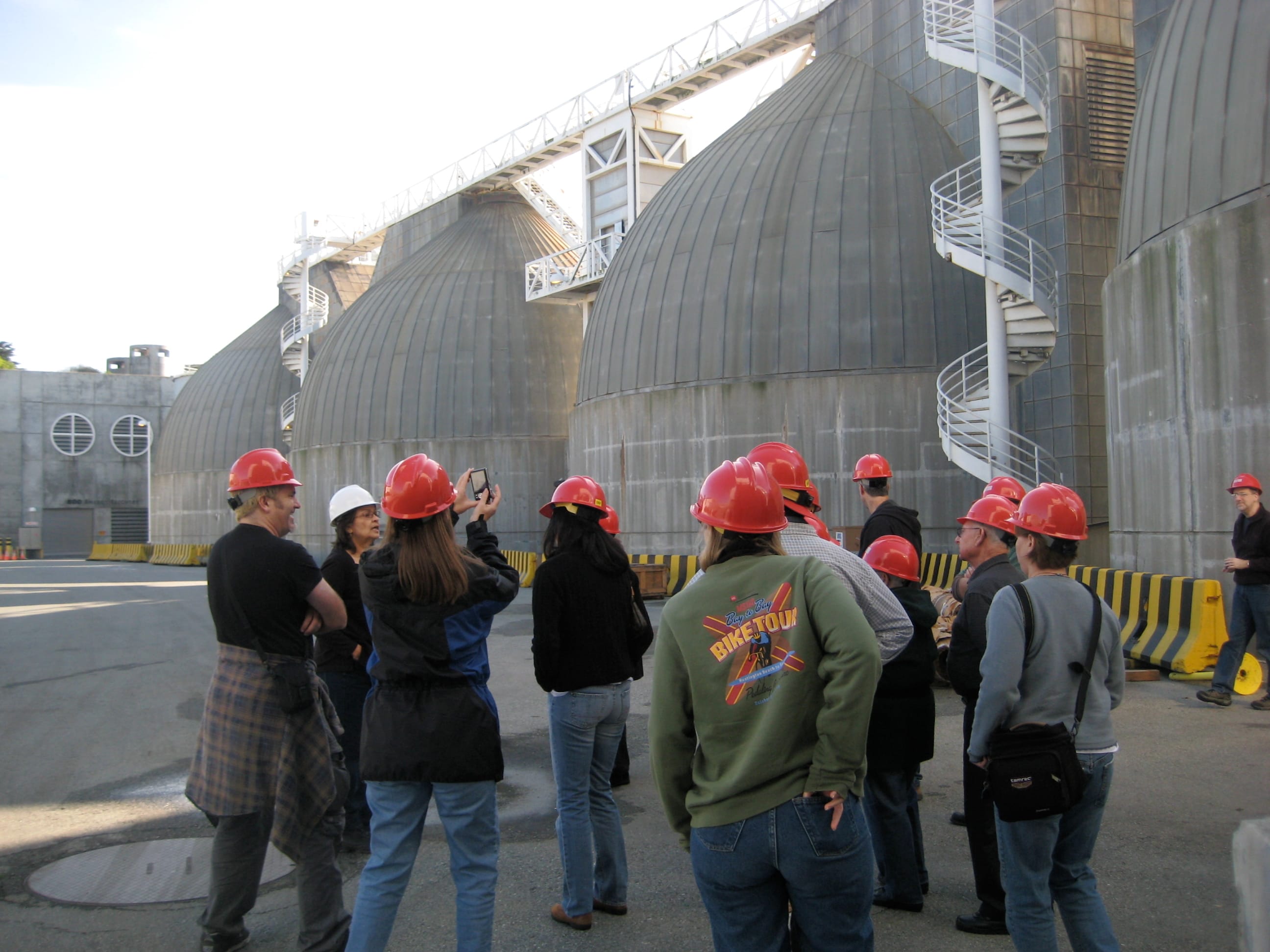 I drove down the Great Highway and past the entrance to the San Francisco Zoo, which has more to do with the neighboring treatment plant than most people know. The plant scrubs and burbles underneath the animals; seventy percent of the plant is dug into the hillside, making this the wastewater plant where one is most likely to be mauled by a tiger.
Following the directions I’d been given, I turned on a sidestreet I’d never heard of and through a tunnel with a massive gate that looked like it could withstand a direct nuclear attack. I emerged into an open courtyard with concrete buildings and to the left a row of onion domes 70 feet tall, each of which, it turns out, can hold 750,000 gallons of sludge. Wow, I thought as I craned my head out the car window. This is an operation.
A staff of 53 works round the clock every weekday, on an annual budget of almost $17 million, and all to clean the dirty water of just one third of the city, and a quiet third at that. That’s how much effort it takes to, in the words of our guide Catania, “get your dirty water clean again.”
Catania walked us across the courtyard to a metal door leading into the plant. We eyed it with caution. Behind the door the entire building hummed, almost rumbled. The plant consumes two megawatts of electricity daily, a third of that dedicated to ventilation. I pictured banks of giant generators rattling, red-lining, barely constraining San Francisco’s waste from surging into the streets.
She opened the door and a great wind blew in our faces.
To be continued…

Leave a Reply