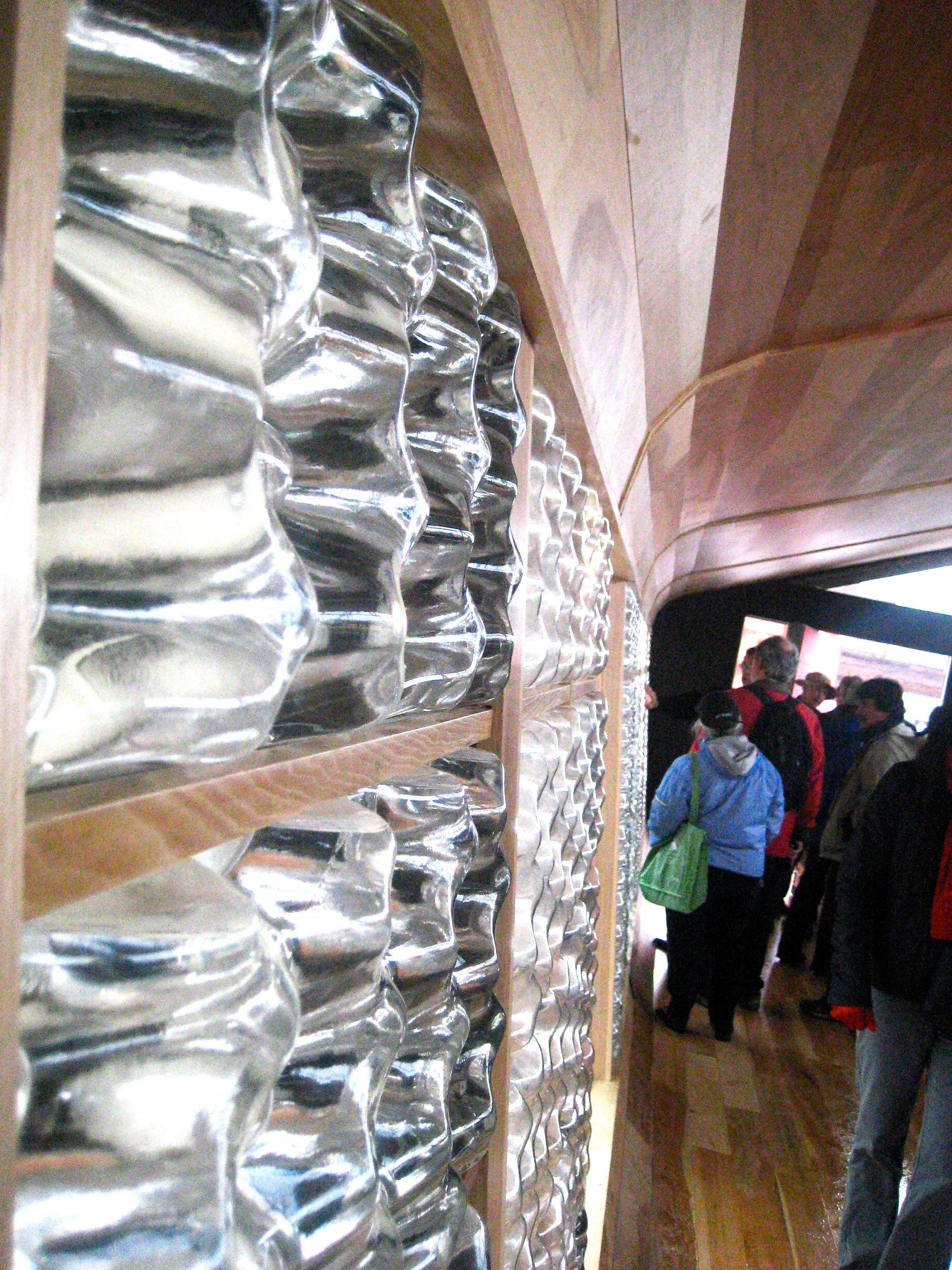
The University of Arizona's Water Wall
Near the Smithsonian building in Washington, D.C. stands a house with a wall of Coke-bottle plastic. Sandwiched between two layers of plastic is water. The wall’s surface conserves heat and also plays tricks with the light, so you can’t help but reach out and touch it.
On the deck of this house, a black kettle hangs twelve feet in the air. On sunny days it is filled with corn kernels. Below, two reflective circles bounce the sun’s rays onto the kettle. When the kettle gets hot enough the kernels pop and send popcorn tumbling down a tube and into a bowl, where they’re served to the crowds at the Solar Decathlon.
When I visited the University of Arizona’s decathlon project today, there was no sun. Clouds and drizzle filled the sky and temperatures hovered in the 40s. Only the feeblest solar energy fed the solar panels, as well as the sightseers, who despite being bundled in thick jackets and hats still stood in lines for half an hour or more to get a glimpse of the homes.
The Solar Decathlon brings 20 universities from around the U.S. and world to build mini-houses on the National Mall. They compete for the title of most energy-efficient house on the basis of ten criteria, including architecture, engineering, comfort and market viability. To win, a project needs to suck as much energy from the sun as possible – the design equivalent of lying on the beach in a bikini slathered in No. 2 Coppertone.
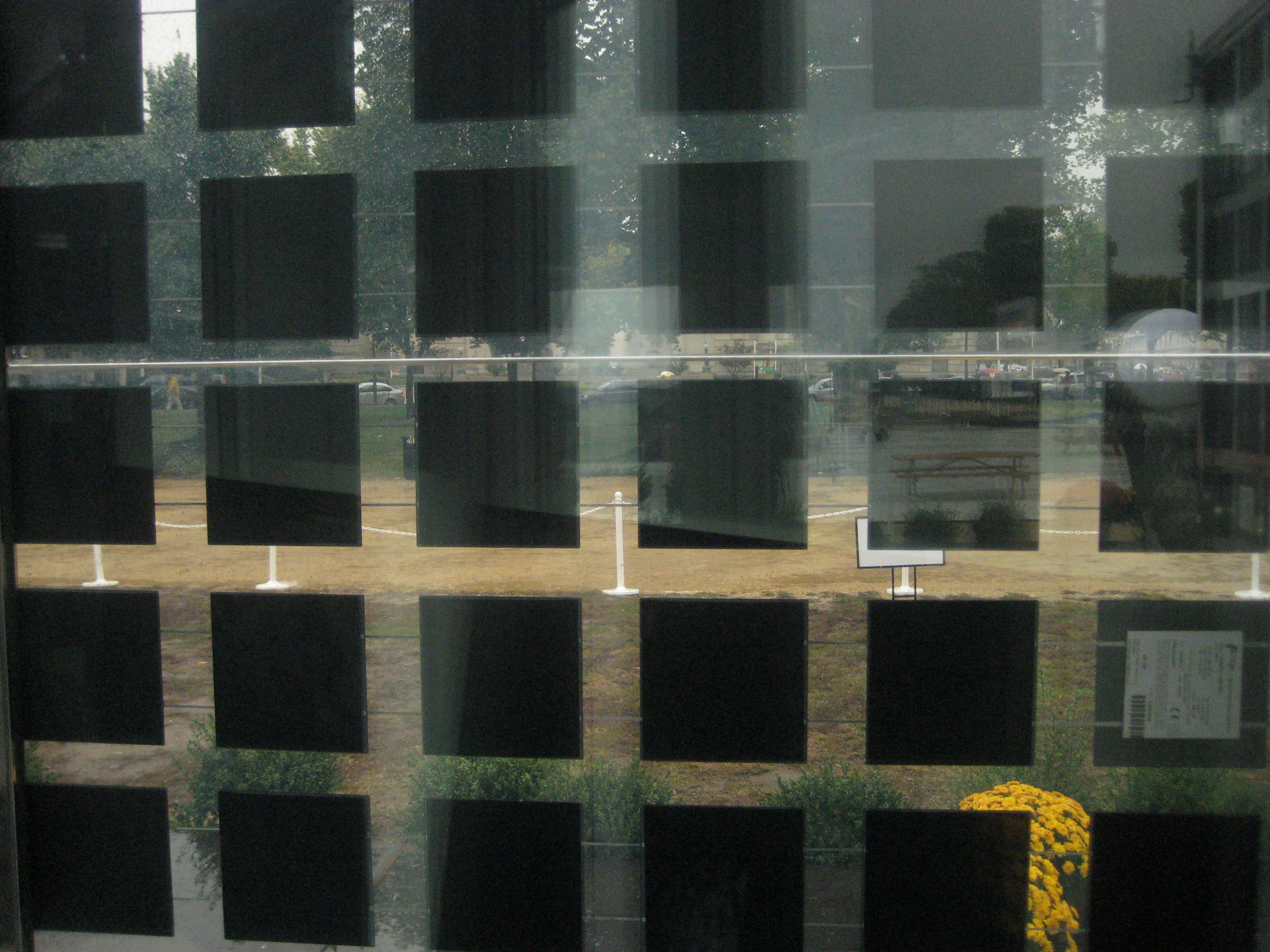
Students met this challenge in many ways. Team Spain embedded solar squares in glass walls and topped itself with a roof-size panel that rotated to face the sun’s rays. Team Germany sheathed its entire building in solar panels, all the way down to the window louvers.
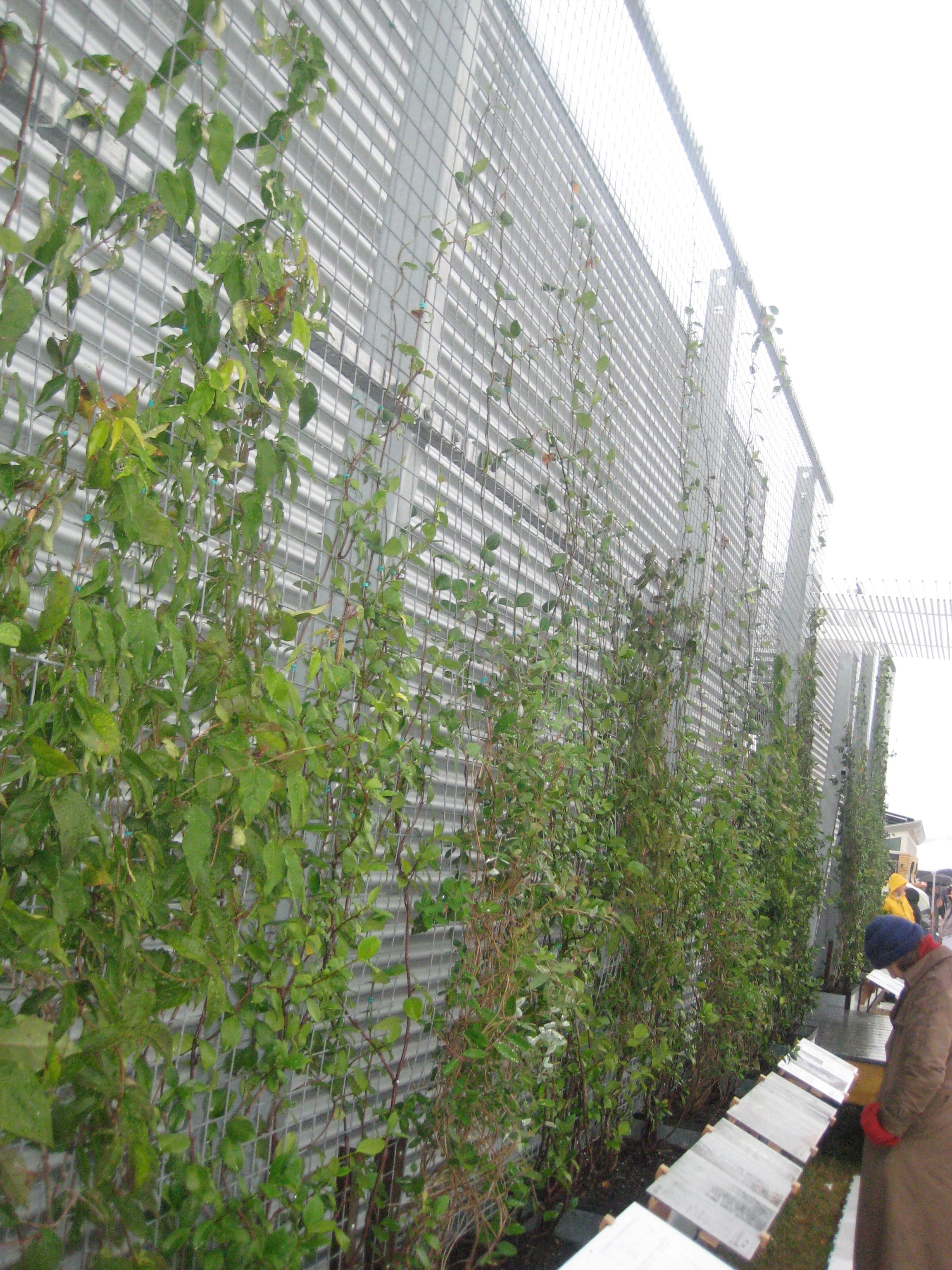
Plants climb the walls at Rice University's Zerow House.
Other projects put water coils under the floor and solar water heaters on the roof and rain-collection systems below the gutters. By investigating these ideas, one starts to look at walls, roof, floors and windows in a new way. They begin to look like a road crew lounging on their shovels. Get to work, you want to say.
One’s roof could be covered with solar panels, or skylights or grass or water tanks. The walls could be made of water or honeysuckle. The windows could open to let cool air in, or served by outdoor louvers to keep the heat out (and then covered with solar film, which worked beautifully for the Germans; they won the contest).
This is how people will look at their home surfaces in the future. The roof and walls will be crowded with energy-saving features, the way a TV remote is covered with buttons or a microchip is covered with circuits. You’ll look for ways to draw just a few more watts out of the sucker.
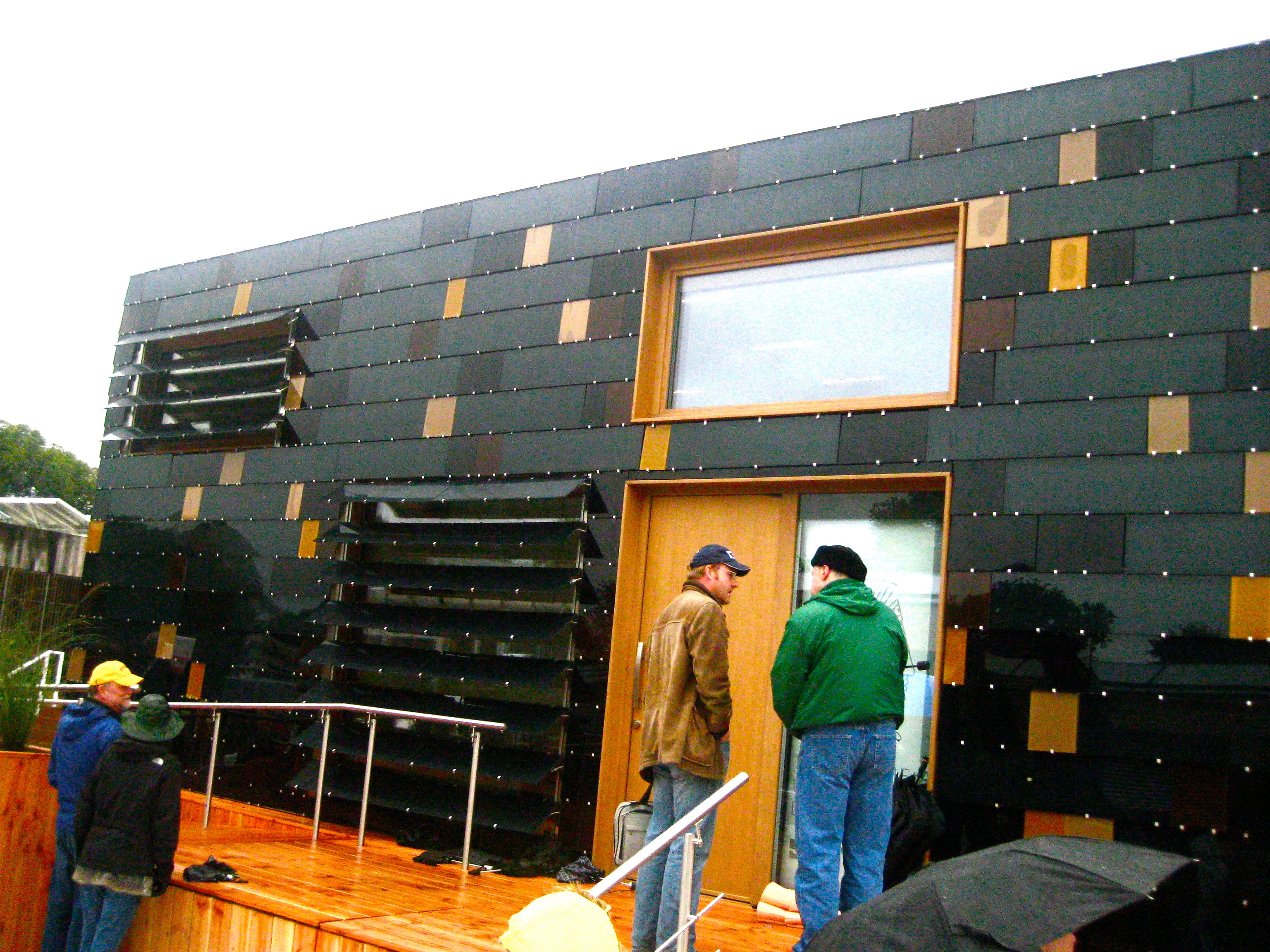
The Germans' winning design.

I recently started out setting up my own solar panels – I utilized some video guides I found and it’s working out fantastic!