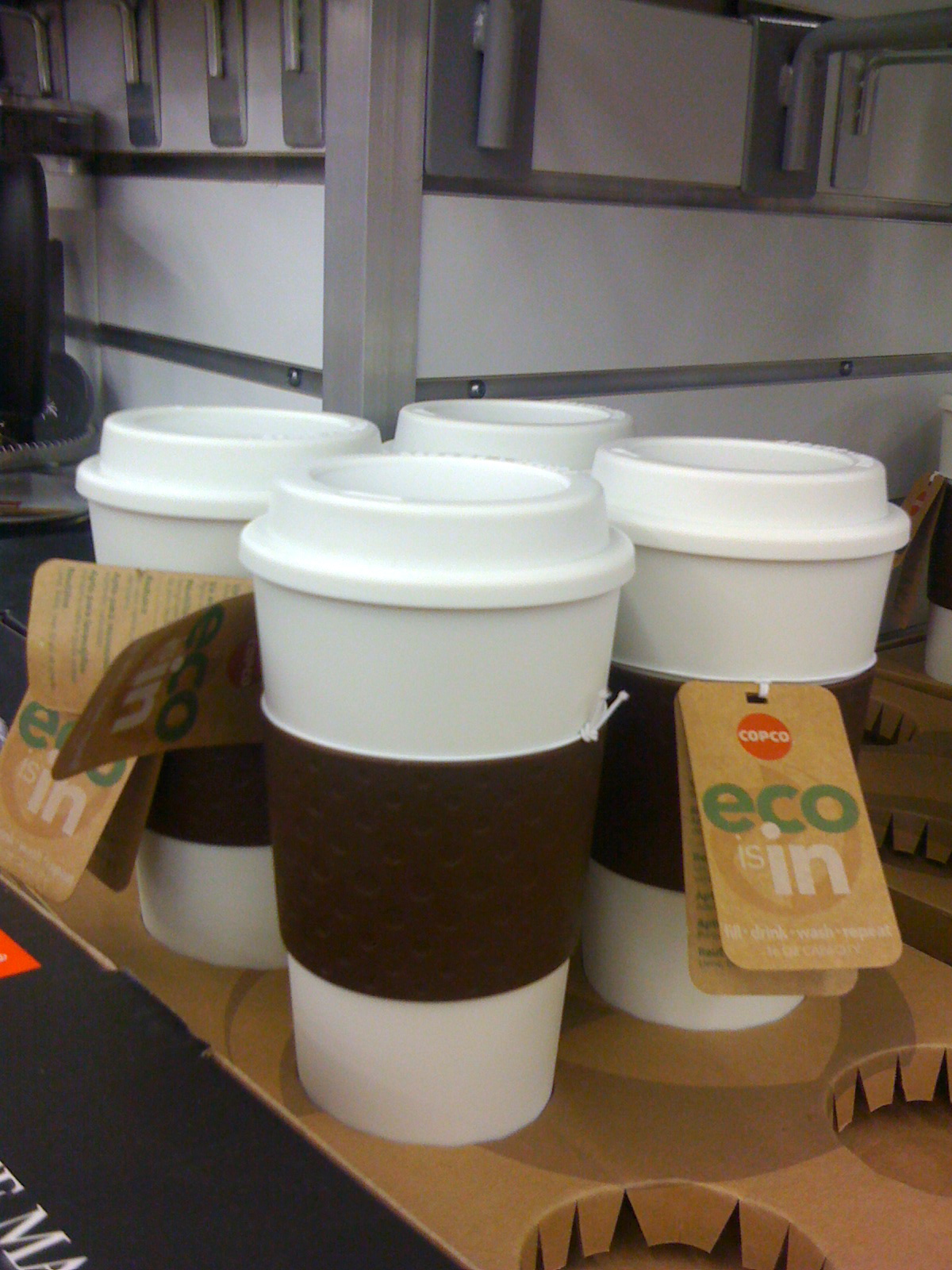
 A few days ago at Bed Bath & Beyond, I was puzzled by something I saw by the checkout counter. It appeared to be a tall display of throwaway paper coffee cups. On closer inspection, they weren’t disposable; they were plastic commuter mugs made to look disposable.
Isn’t that weird?
Try to imagine a parallel from the world of products. It would be like a publisher printing a novel so its pages had the look and feel of newspaper. Or modeling a nice new house on a double-wide trailer home, with faux wood paneling and a cheap aluminum screen door. (If you can think of other examples, real or imaginary, let me know.)
Why would anyone make such a thing? Why would anyone buy it?
I asked the woman at the checkout counter whether people were buying. She nodded. “We had to put up another column of them just yesterday,” she said.
I circled back around to the display and held one. I have to admit it felt comfortingly familiar to handle, since as far as I can tell it’s a virtual copy of the Starbucks cup I have held in my hand hundreds of times. It even had a fake little insulating jacket.
 The Eco-First Travel Mug, as its called, is made by Copco, a company that started making teapots in the 1960s and now is also a major purveyor of travel mugs. Someone at Copco must have gotten a raise for coming up with such a simple and brazen rip-off.
After all, Starbucks and its fellow coffee-sellers have already done the hard work of figuring out exactly what people want in a commuter cup. Teams of caffeinated specialists in Seattle engineered the cup bottom so it would fit any car cupholder, and designed the cup lip perfectly to the human lip, and gauged the insulating sleeve so it would fit for the best grip. No need to redesign what’s already been done.
Starbucks is trying to create an “Eco-Cup” of its own, having set a goal of a creating a recyclable cup by 2012 and making all of its cups (2.7 billion a year) recyclable by 2015. The company also encourages customers to bring their own mugs. Someone at Starbucks HQ is probably stomping mad that a competitor was the first to realize that the customer simply wants a Starbucks cup – made of plastic.
The surprising lesson I learn from the Eco-First cup is how deep and intimate our relationship is with throwaway food containers. I knew we used lots of disposables, but I didn’t know we loved them so much that the best way to make us leave them is to make a knockoff. A higher-quality knockoff. Trash has become the comforting staple of our lives.
I see a whole new generation of eco-products based on the trashy offenders of the past. Food clamshells with the smooth texture of Styrofoam. Water glasses with the waxy finish of Dixie cups.
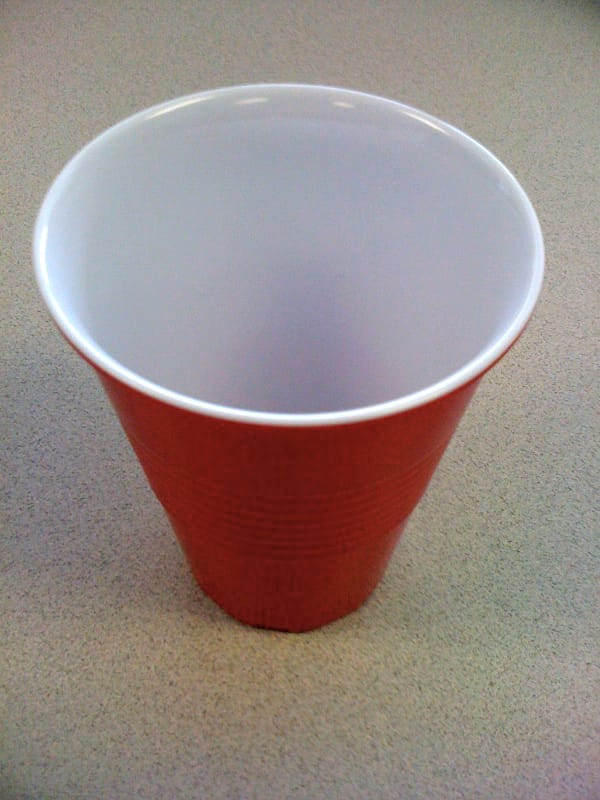
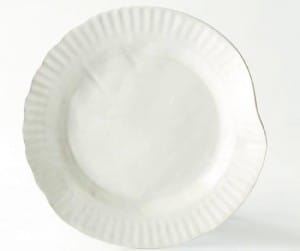
But wait, that day is already here. Someone has already figured out how to make the iconic red beer cup and the white paper plate – out of ceramics!
Special thanks to Mohi Kumar for helping to flesh out the ideas in this post.

Do you think Starbucks actually went through so much trouble to make the cups? I guess that explains why the larger sizes are still the same diameter on the bottom?