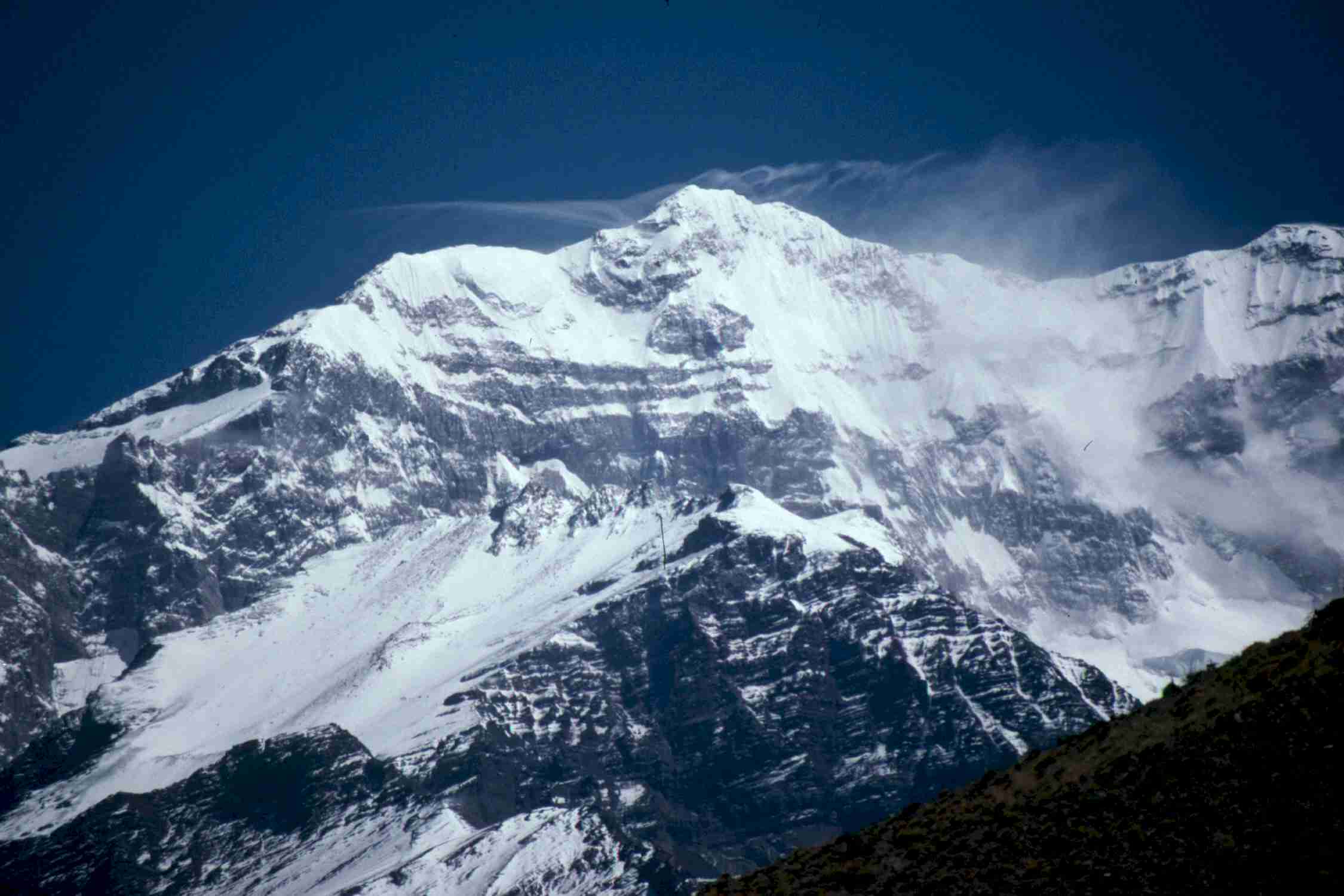
January 8th, 2007 Mt. Aconcagua holds all sorts of records, though most norteamericanos don’t know the peak exists. At 22,841 feet, it is not only the loftiest spot in either of the two Americas, but the highest mountain in the world outside of the Himalayas.
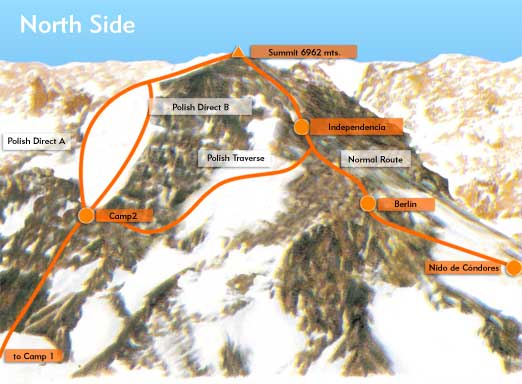
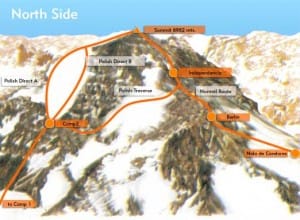 Photo Credit: himalman.wordpress.com It’s also known as “The Highest Hike in the World,” though not by the route we’re taking. If one takes the highly-trafficked Normal Route, it is possible to climb from base to summit without ever setting foot on ice or snow.
Our party will follow what is known as the Polish Glacier Route, named for the four Polish mountaineers who pioneered it in 1934. It is a longer, lonelier and more scenic path. In the last 3,000 feet we will pull out our crampons and ice axes to scale the Polish Glacier, on a slope of about 30 to 35 degrees. (No bottled oxygen is needed to climb Aconcagua.)
Well before, from 9,000 to 11,000 feet, we will wend our way through semi-arid forest. Above that point, we enter an alpine desert where not a thing grows – no trees, no bushes, not a tuft of grass. Just the glaciers rising above and, if the reports are true, an unending wind.
January 8th, 2007 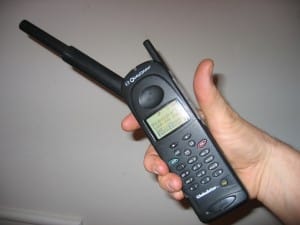 How do these audio feeds (starting Jan. 10 or so) from a mountainside in Argentina reach you here, on my blog? Some nifty, but not very pricey, technology makes it possible. How do these audio feeds (starting Jan. 10 or so) from a mountainside in Argentina reach you here, on my blog? Some nifty, but not very pricey, technology makes it possible.
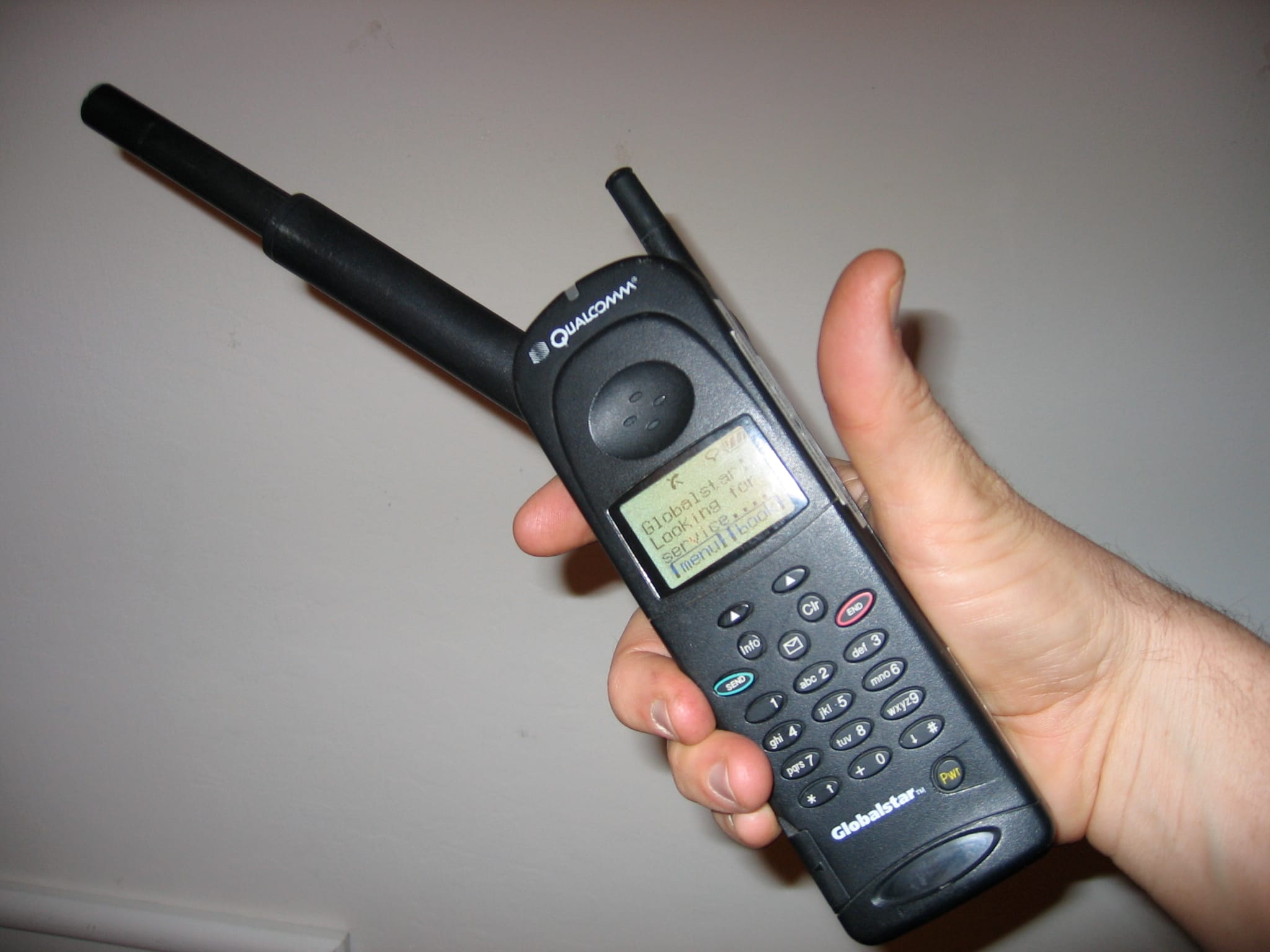
I am calling from a satellite phone, a Globalstar GSP-1600, a chunky handful of a communicator with an antenna so big and important-looking that every time I put it to my ear, I expect to hear orders from Starfleet Command. I rented it from an outfit in Oregon.
I call a phone number with a Pennsylvania area code and leave a voicemail. That voicemail is recorded as a sound file and forwarded automatically to my trusty and talented brother-in-law, Steve Sears, who posts it on The Ferris Files. And who helped figure all this out.
Big props to Steve for lending his talents to this project.
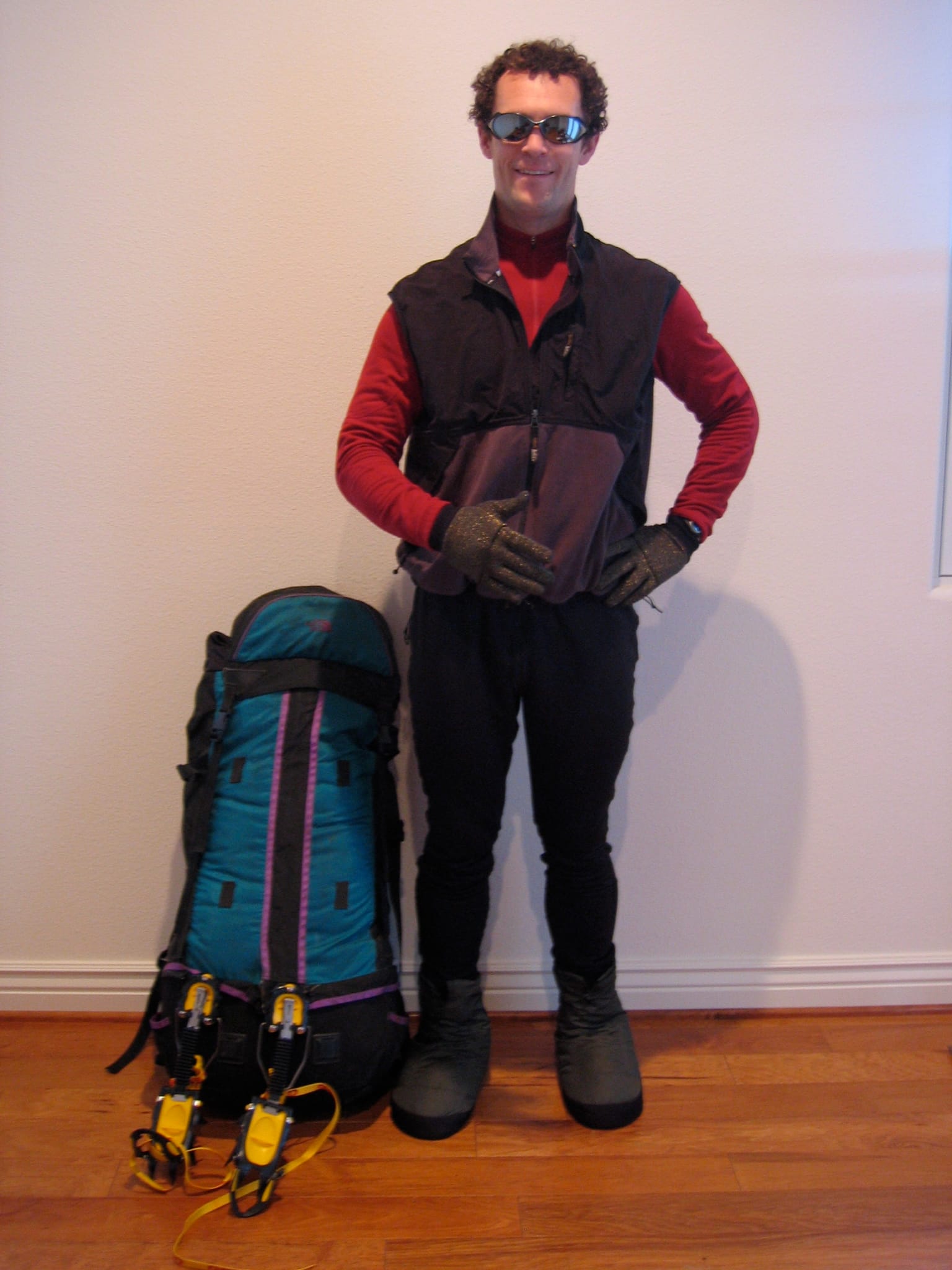
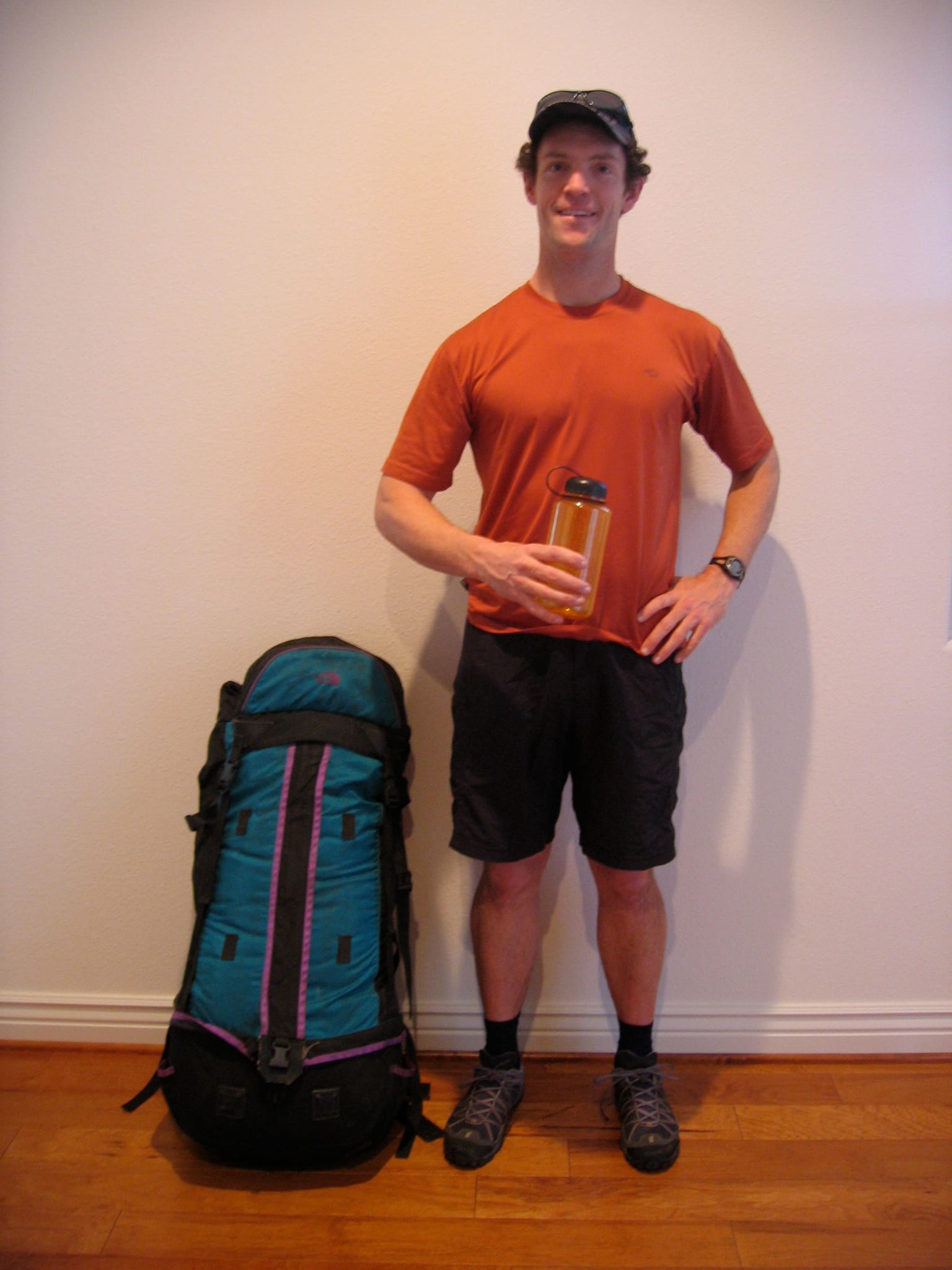
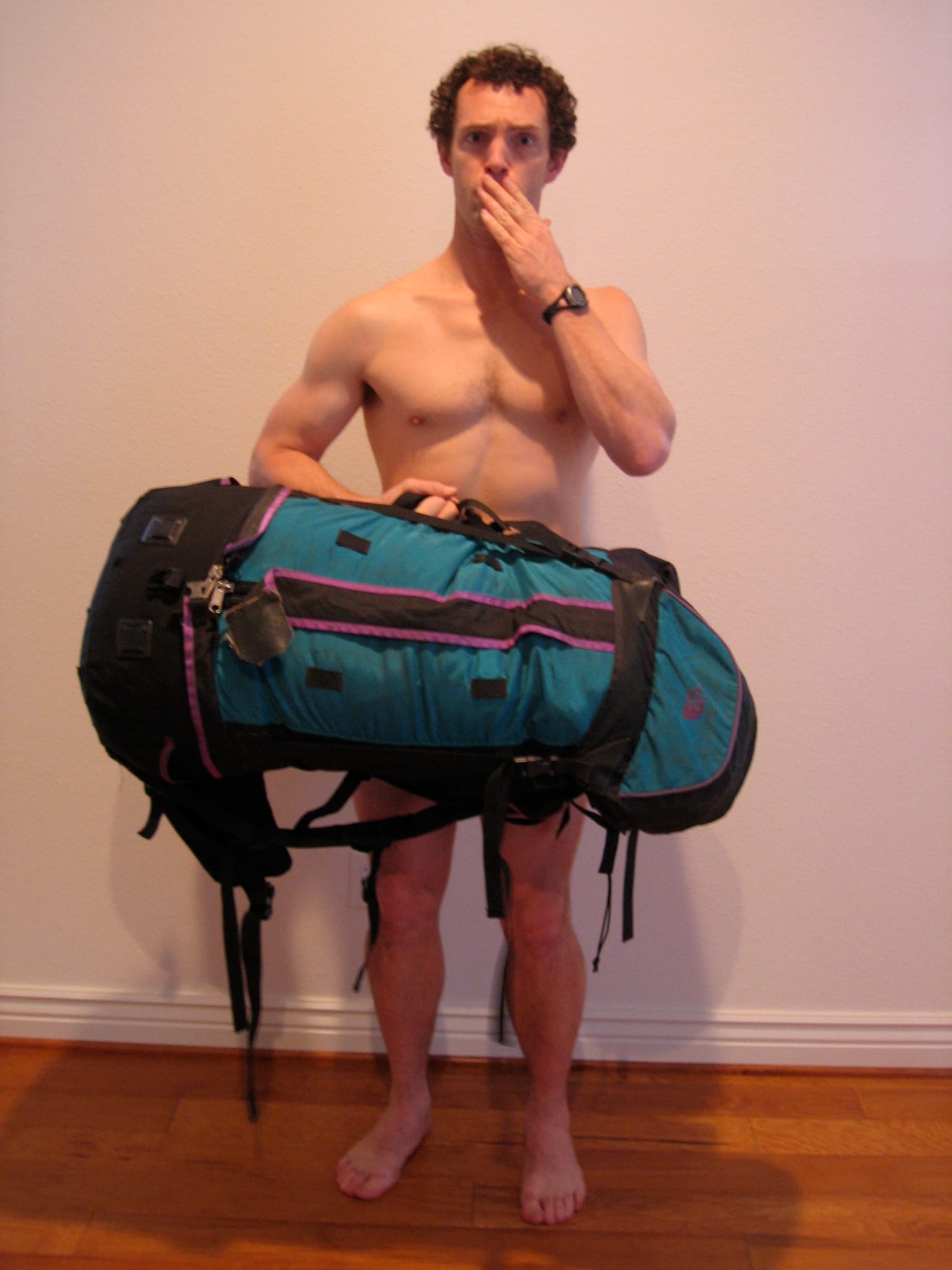
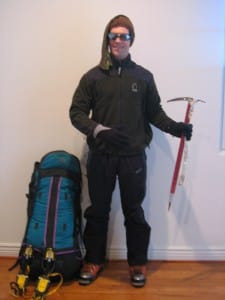
January 7th, 2007 When climbing a mountain, what does one wear to stay warm and dry while looking one’s best? I’ve compiled this primer, for the summit, the base and all activities in between.
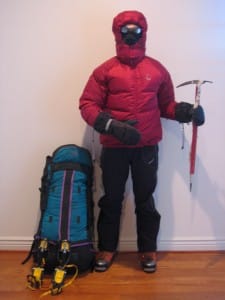 |
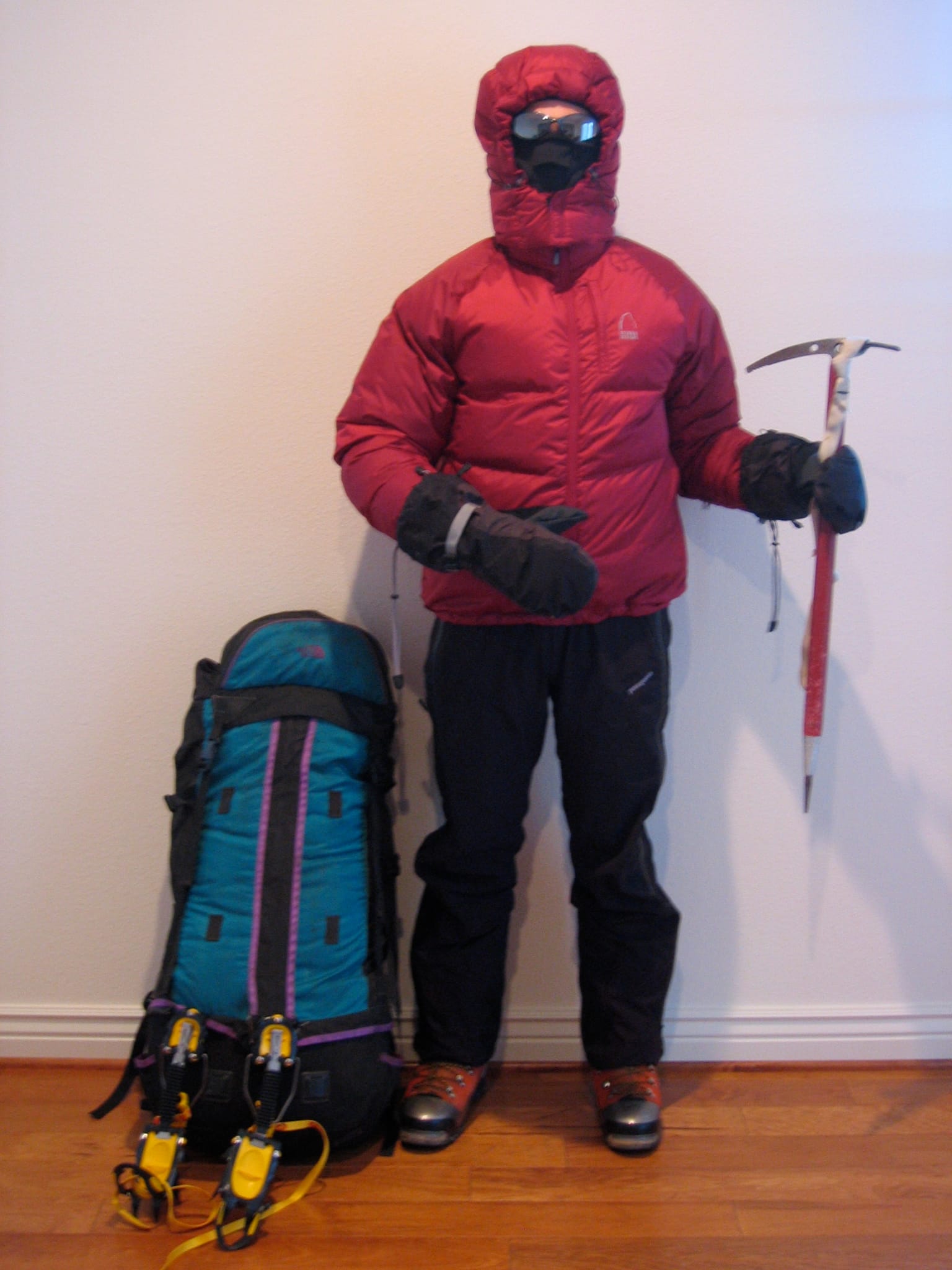
Summit Day
Sierra Designs Down Jacket
REI Switchback Waterproof Mittens
Patagonia Waterproof Bib
Outdoor Research Balaclava
Julbo Glacier Goggles
Koflach Degre Boots
Grivel G12 New Matic Crampons
Weathered Old Iceaxe |
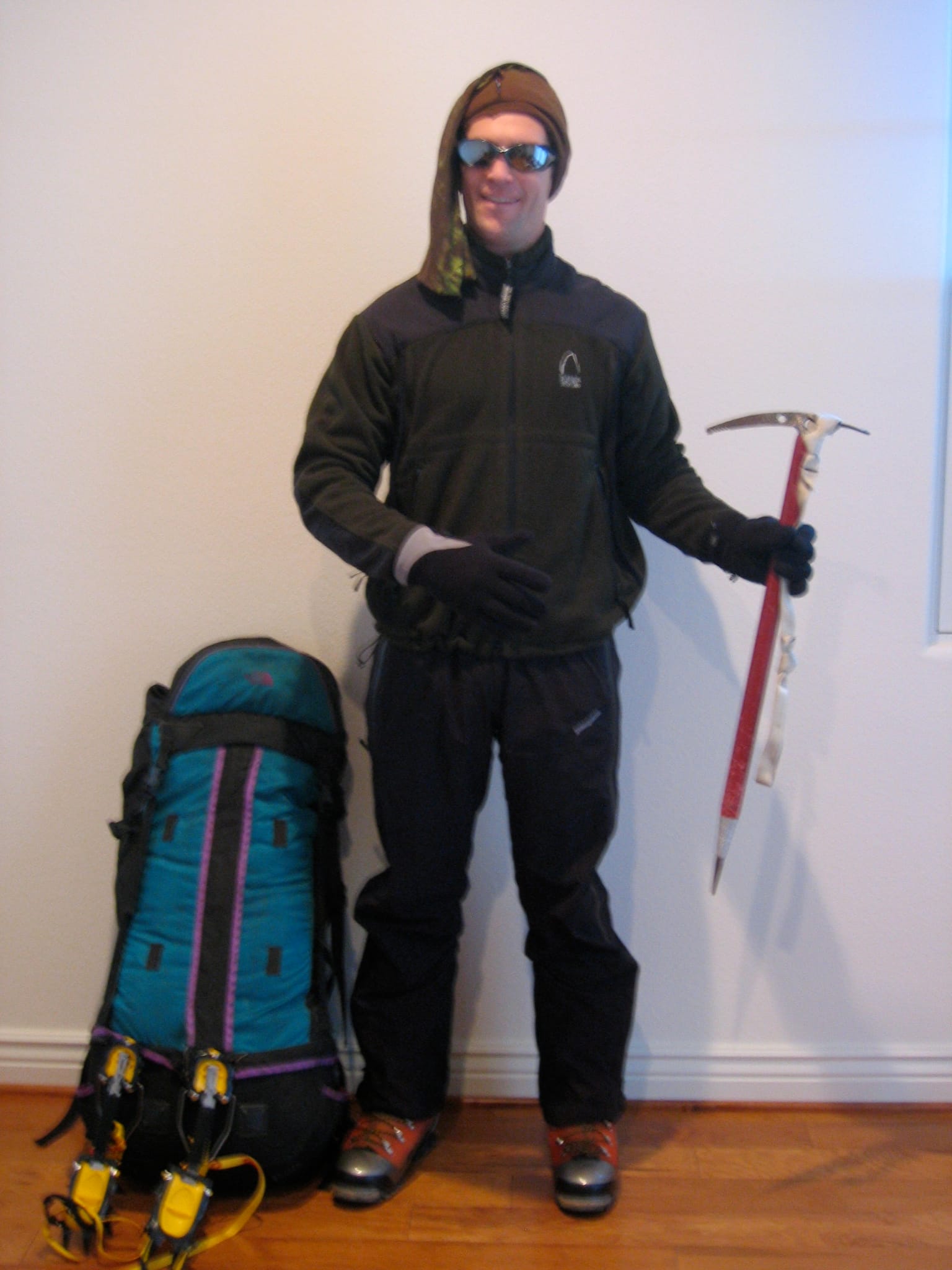
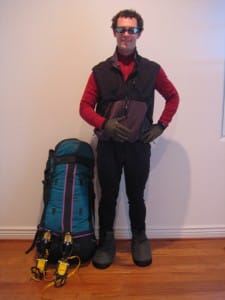
Active High-Altitude Day
Sierra Designs Fleece Jacket
REI Fuzzy Fleece Gloves
Buff (that thing on the head) |
 |
 |
Lounging at Camp 1
REI Expedition-Weight Pullover
Ratty Old Windproof Vest
Shiny Gold Liner Gloves (Michael Jackson Edition)
Patagonia Superfly R-1 Long Underwear
Sierra Designs Down Booties |
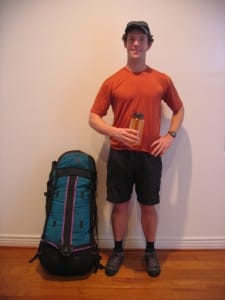
Low-Altitude Hiking
Brooks Baseball Cap
Brooks Running Jersey
REI Adventure Racing Shorts
Inov8 Trail Runners
Ugly Plastic Water Bottle |
 |
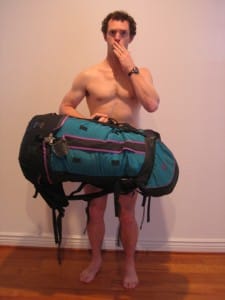 |
Caught Tanning
Bullfrog Sunscreen (SPF 40)
Body Hair |
January 5th, 2007 I believe we will summit Aconcagua, and it is my climbing mates that lend me that confidence. All of them have run marvelous distances and endured great hardship; I only hope I can keep up.
I have climbed before with Marshall, Terri and Rich. As yet I don’t yet know Louise, Frank or Nancy, but I am sure I will know them well – better even than some of their friends – after this adventure.
Marshall Ulrich put this whole outfit together. I came to know him in 2005, when I joined a trip he organized to climb three of Mexico’s biggest volcanoes. He smiles as he checks in with you, then zooms out of sight up the trail without seeming to exert himself. Marshall has done more than 116 ultramarathons (footraces of at least 100 miles each). He is also the only person to complete all nine Eco-Challenges and, to top it off, has climbed the Seven Summits (the highest peak on each continent). But none of this seems to have gone to his head. He’s still the most affable, humble guy to ever smoke your ass on a trail.
Terri Schneider is a good friend of mine and the person to whom I owe my presence on this trip. A longtime professional triathlete and top-five finisher in the Hawaii Ironman, she is one of the most experienced female adventure racers in the world and also runs insane distances, like the seven-day stage run she did across the Sahara two years ago. She trained for Aconcagua by climbing Kilimanjaro last month. When you hear a booming laugh coming at you from down the trail, it is usually hers.
Rich Shear exudes a small-town warmth that he comes by honestly. He is from the tiny town of Wellsville, New York, where he owns a shoe store and a farm, and where he founded the Ridgewalk & Run, a popular charity event. He is also an ultradistance marathoner, heading out West every year or so to run 100 miles in the Sierras.
Frank Fumich goes big on the first try. His first footrace ever was a marathon, his first triathlon was an Ironman, and his first summit was Washington’s Mt. Rainier. Since those days he has seasoned himself with other grueling events like the Hawaii Ironman, the Badwater, and the Marathon des Sable. Big mountains to his name include Mt. Kilimanjaro and a harrowing climb up Mt. Elbrus in Russia.
Louise Cooper has raced in the Hawaii Ironman Triathlon seven times and has an expedition-racing career almost as long as the sport itself. In 1998, however, she was diagnosed with breast cancer and took on treatment with the same grit she applied to racing. Five months after she finished radiation treatment she raced in the 135-mile Badwater ultramarthon and came in second. She works as an elementary-school teacher.
Nancy Bristow is an adventure racer and a friend of Louise and Terri.
The seventh member of our party is at the moment a stranger. He or she will be furnished by our guiding service.
January 5th, 2007 Armchair climbers might like to know where I am, or at least where I’m supposed to be, each day during this climb. This is a guideline only, as storms, illness or other surprises might delay us. Two “contingency days” have been built in for this circumstance.
Jan. 8 – Leave San Francisco
Jan. 10 – Mendoza, Argentina (2,500 ft. / 760 m)
Jan. 11 – Drive to Puente del Inca (8,900 ft. / 2,725 m) to buy our permit and stay overnight
Jan. 12 – Hike from Quebrada de Vacas trailhead to Pampa de Lenas (9,400 ft. / 2,867 m) – Day 1
Jan. 13 – Hike to Casa de Piedra (10,650 feet / 3,245 m) – Day 2
Jan. 14 – Hike to Plaza Argentina (Base Camp) (13,790 ft. / 4,203 m)
Jan. 15 – Rest day at Base Camp
Jan. 16 – Carry* to Camp 1 and back to Base Camp
Jan. 17 – Rest day at Base Camp
Jan. 18 – Move to Camp 1 (16,240 ft. / 4,950 m)
Jan. 19 – Carry to Camp 2 and back to Camp 1
Jan. 20 – Rest day at Camp 1
Jan. 21 – Move to Camp 2 (19,000 ft. / 5,800 m)
Jan. 22 – Wait for better weather at Camp 2 (19,000 ft. / 5,800 m) (updated by steve)
Jan. 23 – Wait for better weather at Camp 2 (19,000 ft. / 5,800 m) (updated by steve)
Jan. 24 – Climb to Summit (22,841 ft. / 6,962 m) and back to Camp 2
Jan. 25 – Descend to Base Camp (13,700 ft. / 4,200 m)
Jan. 26 – Hike to Pampa de Lenas (9,100 ft. / 2,800 m)
Jan. 27 – Hike to trailhead at Quebrada de Vacas and stay at Puente del Inca
Jan. 28 – Return to Mendoza
Jan. 29 – Fly out of Mendoza
Jan. 30 – Arrive San Francisco
* On a “carry” day we ferry equipment to a higher camp and return to where we started. This is a time-tested technique for acclimatization to higher altitudes.
January 1st, 2007  I’m happy to report that a story of mine, “Getting Lucky,” has just been published at SMITH Magazine, an online literary publication out of New York. The subject: Is your luck just your luck, or do you earn it? I’m happy to report that a story of mine, “Getting Lucky,” has just been published at SMITH Magazine, an online literary publication out of New York. The subject: Is your luck just your luck, or do you earn it?
To answer this question, I tell about a trip I took in November 2005 to climb three big volcanoes in Mexico with a hardy band of athletes, including one unlucky soul. Some of the actors in this tale – Rich, Terri and Marshall – will accompany me up Aconcagua this month.
Special thanks go to Laura Fraser for connecting me with the good people at SMITH.
December 28th, 2006 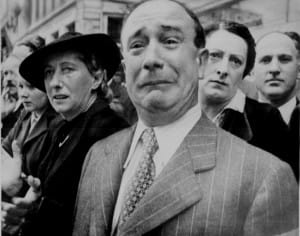 Photo Credit: www.oldmencrying.com I just started a fitness-training program for a new client, a Frenchman named Claude*. I expected Claude would buy a dozen sessions upfront, like many of my clients do, since it is cheaper that way. But when I Claude handed me his check I saw it was for only three.
“It is enough until you leave for your trip,” he told me apologetically in his singsong accent. “This is not because I do not like you. It is because at one time I have this paragliding instructor? And we have two sessions left to finish our course, and he go paragliding, and he died.”
Claude looked me straight in the eye.
“I guess I’d better live through this mountain and come back to train you, shouldn’t I?” I said.
“I would like that,” Claude replied.
* Names have been changed to protect the innocent.
December 26th, 2006  Photo Credit: www.farm4.static.flickr.com On Christmas Eve, I trained by hiking to Rose Peak on the Ohlone Wilderness Regional Trail, which is in its pristine prehistoric state, except for the occasional menacing gang of cows.
I suppose there is nothing to fear from a cow. That is easy to forget, however, when you’re on foot alone and haven’t seen another person in seven miles and you come across a herd of cows and their fuzzy little calves grazing square on your path.
They raised their great heads to stare at me, and I approached with a swagger that I hoped communicated, “I am on top of the food chain, and you are not.”
Inside I thought, three of these monsters weigh as much as the entire Chicago Bears offensive line. I hope they don’t think I am stalking their children, or realize that these shoes I am wearing are made from their cousin Ned.
Most times the cows trotted off. But this one time a bovine stood its ground, and it wasn’t until I was fifteen feet away that I realized it had horns. It also had an udder, which added confusion to my fear, as if I had run headlong into a 6’5” leather-wearing man in the Castro, only to look up and realize he was actually a she. Later, I learned, this horns-and-teats combo is just natural – cows are born with horns, just like bulls. But I didn’t know that yet. This sexually ambiguous cow stared dimly at me, and I back at it, until I turned and disappeared down the trail. I made it home for Christmas, alive and untrampled.
The Ohlone Wilderness at this time of year is a landscape of pale grays and greens: fields of fresh buds just starting to show through last summer’s blasted straw, and naked oaks the same color as the rocks – gray in the weak December light, with a coating of pale lichen. To the west a sharp-edged layer of fog blanketed San Francisco Bay, and from that direction a wind whispered, carrying the smell of cow pies.
December 19th, 2006 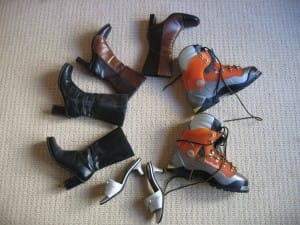 I spent $260 on a pair of shoes last week. Should I be ashamed? I spent $260 on a pair of shoes last week. Should I be ashamed?
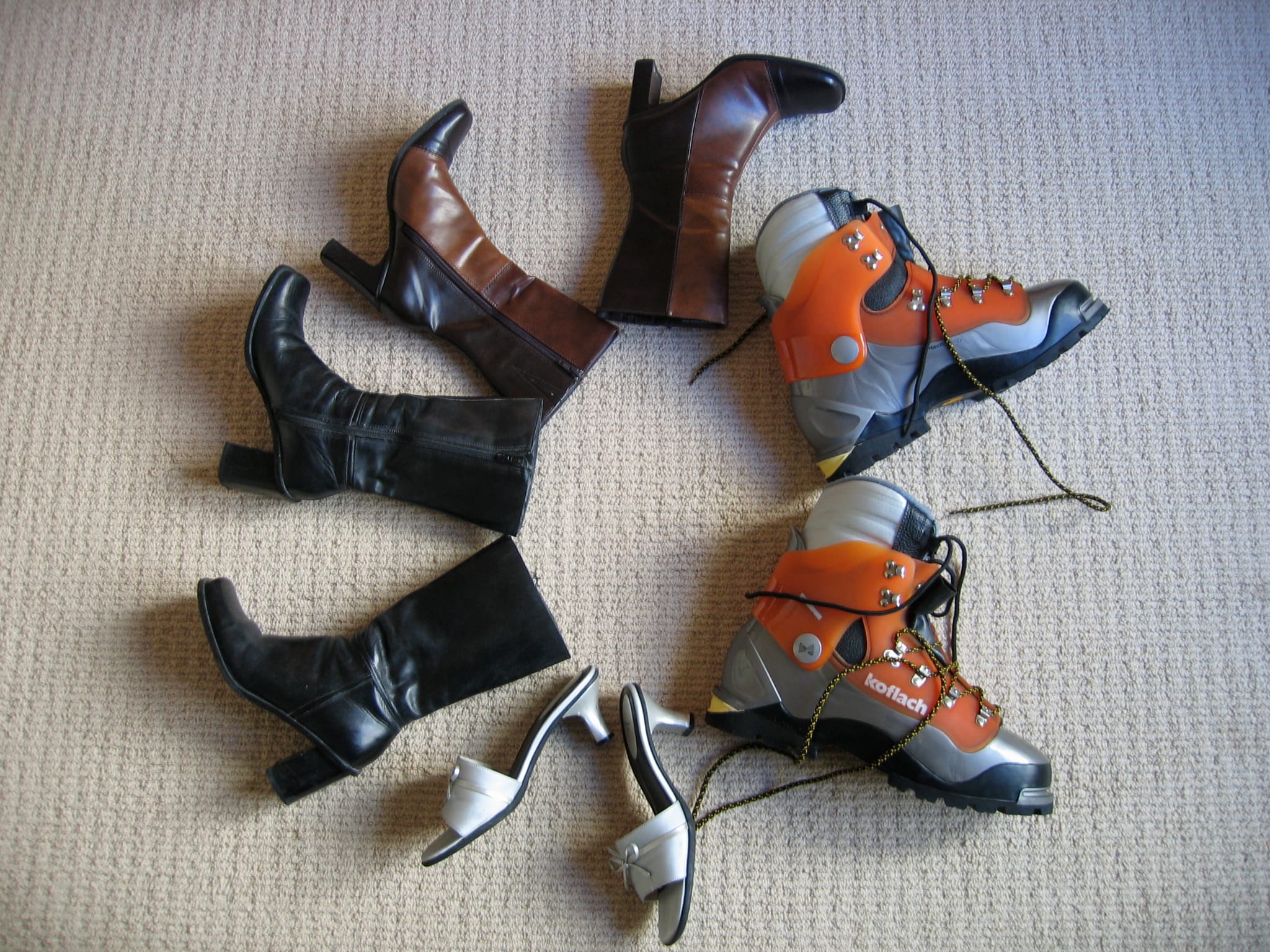
Granted, they aren’t Guccis or John Varvatos or some other buttery-leather confection that a pretty boy would don to tour Milan. They’re Koflachs, a brand that sounds more like a sneeze than a shoe. Austrians made them, bearded men in steel-rimmed glasses who smell, not of aftershave, but zinc oxide and sweaty polyester. The color is traffic-crew orange.
To call the Koflach Degre a “shoe” is like calling a Humvee a “car.” Waterproof and sheathed in plastic, they have Vibram soles like truck treads. Below the sole I will strap inch-long steel spikes, called crampons, for climbing ice high on Mt. Aconcagua. Snow and cold will not bother my feet; my Koflachs will muscle them off like bouncers.
The inner boot can be removed so I can stroll around camp in comfort. Mmmm, soft and fluffy.
Even so, I can’t quite countenance spending the equivalent of 26 movie tickets, or nine tanks of gas, on a dumb pair of shoes, which in my mind still ought to cost about $33 at Payless.
You women are probably shrugging because $260 is less than you paid for the pair of beaded flip-flops you wore once last summer. But guys, you ought to know my shame about expensive footwear. If not, I’ll expect to see you sashaying around Milan next season.
December 8th, 2006 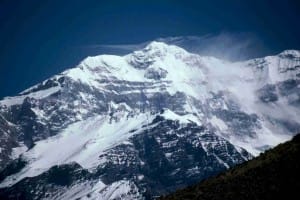 Photo Credit: www.loveofmountains.com Sometime around January 24, 2007, I will trudge up an icy hillock, gulping at thin air, and stand at the top of Mt. Aconcagua, at 22,841 feet. There will be nowhere higher to go. It’s the highest point in the Western Hemisphere.
To the north and south I will look down at the tops of two massive 21,000-foot peaks, Tupungato and Mercedario. If it’s cloudless I will also see the Pacific Ocean. Aconcagua lies within Argentina but is so high one can peer over Chile and into the deep blue.
I say this as if this summiting is a foregone conclusion. It isn’t. Any number of things could go wrong. Storms could blind our path, or I could be forced to beat an early retreat if my lungs or brain swell with fluid, as sometimes happens to climbers on high. I, or someone I’m tied to, could fall and we could slide to our deaths on the final 3,000 feet of glacier, God forbid.
My, what shadowy thoughts. My buoyant personality wriggles up from that gloom like a beach ball popping to the surface of a pool. I will get to the top, I just will. We have guides, we have experience and stamina. All I need is patience and the fortitude to endure pain. No problem, I say. It’ll be fun. Right?
|
|