Happy New Year, world, and let’s start things off with a ray of sunshine. My latest “Innovate” column in the January/February issue of Sierra magazine is about how engineers are employing biomimicry to increase the usefulness of solar power. The title: “Solar Designs from Nature.”
This is one of my favorite topics in the nearly three years I’ve been writing the column. Humans have been working at turning solar power into electricity since the 1950s; plants and animals have been turning sunshine into energy for time immemorial. No surprise that they’re better at it than we are. In my research, I looked for instances where engineers and materials scientists stumbled upon discoveries made by biologists that had been lying around unnoticed.
Here is a brief rundown of the findings, though I recommend spending a few minutes clicking through the interactive graphic to understand sunflowers, leaves and butterflies and how clever they are.
Tongxiang Fan, a materials scientist in China, discovered a remarkable property of wings that help swallowtail butterflies warm up in the sun, and then used the discovery to create hydrogen fuel.
A team at MIT looked at the design of the center of a sunflower — the part where the seeds reside — and modeled a concentrated solar plant after the spirals found within it. The “Golden Angle,” as its known, also makes a concentrated solar installation take up a lot less space.
A postdoctoral researcher at Princeton University named Jong Bok Kim wanted to find a surface for solar panels that would yield the most energy. The answer, it turned out, resided in a bush near where he eats lunch. The secret is the surface of the leaves, which appear smooth to the eye but at the microscopic level are more like mountains, full of jagged angles that make photons bounce around.
If you know about other instances where renewable energy follows biology (or ought to), let me know in the comments or in an email. Fascinating stuff, isn’t it?
The “mosquito bat,” as it is known in Indian circles, is a most cathartic way to vanquish bugs.
The most unwelcome sort of wildlife here in South India is the mosquitoes. They are tinier, stealthier versions of their American cousins and are far more dangerous, carrying malaria and (most recently) an outbreak of dengue fever. This emergency calls for…the mosquito bat!
That isn’t its actual name — on Amazon it’s called an electronic insect catcher — but as with so many things, India has found its own odd terminology. I saw a mosquito bat leaning on the wall while we were visiting the house of my wife’s aunt Hemathe, which for some reason is always alive with the little buggers.
1) Switch on the mosquito bat; 2) swing it in the general direction of the mosquitoes with the alacrity of Aggasi; and 3) ZAP! ZAP! BZZT! The mesh layers of the bat light up with blue flashes. Each flash is a kill. The little buggers are not just incinerated, but vaporized. Not even a wing or mouthpart remains.
I got so enthusiastic with the mosquito bat that the air got a little smoky and smelled of ionized violence.
To learn more about the local mosquito plague, check out my my most recent posts on Forbes:
The Raintree Hotel rooftop bar. Photo Credit: Chennai Notice Board
The Raintree is a high-rise luxury hotel on St. Mary’s Road, just a few dusty streets away from where I stay. From the polished lobby, one boards an extraordinarily quiet elevator and emerges onto a rooftop bar with a swimming pool, dining tables, and a perimeter bar underlit by blue neon and with an airy view of the city. The effect is striking because the bar is sleek and modern, while the street is strewn with piles of rubble.
I was here to meet a new acquaintance, Ben*, an thirty-something American who has been living in Chennai for a year and who took eagerly to my suggestion of the Raintree as a place to meet — a little too eagerly, I thought, considering that I had suggested it only because I knew of nothing else. I figured Ben would know of grottoes and pubs much cooler than a hotel bar.
Ben ordered a mixed drink while I got a tall Kingfisher and we set to talking at the very corner of the bar with a maximum view. I had many questions for Ben and he obligingly answered. Yes, I was right that there are almost no Americans or other white people here, except for a few of the long-haired spiritual seekers outside the Kapaleeshwarar temple; yes, most of his friends are Indian; yes, he has his own apartment and a halftime maid who cleans his house and delivers his lunch every day. My next question: What is the nightlife like in this town?
“Well, there’s Havana down there,” he said, and pointed over the ledge to a little ground-floor hotel outbuilding with jaunty red awnings. “And there’s the Dublin over at the Park Sheraton, and there’s the bar at the Hilton. And then there are the A/C Tasmacs.”
The what?
TASMAC, it turns out, stands for Tamil Nadu State Marketing Association, or, in short, where Tamilians go to get their drink on. The state vigorously regulates alcohol and sells it only at state-approved stores. The TASMACs, apparently realizing they have a good thing going, have come to incorporate a bar of sorts where the patron acts as both bartender and customer, serving himself a snort of his newly-acquired whiskey (and of course enjoying the A/C). The fluorescent lights are harsh, Ben said, but it’s more convivial than your own living room. I told Ben he would have to take me to a TASMAC sometime soon, and he agreed.
I expected Ben to enumerate more night spots, but he fell silent.
“So that’s it?” I said. “A city of 4.5 million people, and the only places to party are three hotel bars and the A/C TASMACs?”
Entrance to an alleyway wedding hall, glimpsed during a walk on CP Ramaswamy Road this morning.
It is my good fortune to be writing to you from southern India, where I will be stationed for the next two months or more. On the coast of the Bay of Bengal, near the tip of the subcontinent, in the bustling city of Chennai, home to 4.5 million souls, your correspondent will be ensconced in a cabana overlooking a pool and an aggressive flock of pigeons.
Nearly four years ago my lovely fiancee Anjali brought me here to be married in an arya samaj, an abbrevated version of a Brahmin wedding ceremony that cuts out the parts that are irrelevant if the groom is not Brahmin, not Hindu and not Indian. (Even in this shortened form, it lasted a day and a half). Now we’re back. The little lady is taking a break from work and spending some tea time with her relatives, who in this city alone number in the dozens. Meanwhile, my goal is to capture some of crazyquilt India in stories, both here on the personal blog and in publications of greater repute.
India is modernizing so quickly that one can observe the changes on a drive through town. First off, the cows have disappeared. On my first visit, I saw a few staring vacantly at the traffic as they nibbled on piles of trash. Cows are terrible urban dwellers under the best of circumstances, but are especially troublesome here, where, in keeping with Hindu scripture, the sacred cow wanders untethered. If one steps in front of your auto-rickshaw for snack on the median, well, it’s brake lights for you. But now some sort of bovine cleansing has occurred, at least in the daylight hours. During a predawn walk today I saw a total of three, which tells me that the cows aren’t gone, just hidden. But where does one hide a cow?
Another vanished species: Wild-eyed, grey-bearded men in lungis (skirts) pedaling rickshaws. While young cyclists continue to brave the traffic, the old men seem to have retired or died, and in their place are legions of motorbikes, piloted by young men in moustaches. Women appear more confident. It’s common to see a young lady striding along talking into her cellphone, and in the early morning, the older women take fitness walks on CP Ramaswamy Road in their salwar kameezes and Adidas tennis shoes.
The mosquitoes are small and stealthy as ever, though perhaps more dangerous, since their stingers bear not just the threat of malaria but a growing epidemic of dengue fever. They have none of the manners of the American mosquito, which courteously announces its presence by whining in your ear canal. The Chennai mosquito just grabs a drink and leaves me scratching an ankle.
Not everything changes, of course. The same soft breezes off the Bay of Bengal stir the palm trees, and the Adyar river still stinks of sewage. The elevated rail system remains half-finished, with lines ending abruptly, tendrils of rebar extending out into nothing. At the dirt lot across from our apartment block, kids play cricket in the morning and a few musclemen take turns doing bench presses with a rusted old barbell. More observations to come; watch this space.
Corwin Hardham, the late founder and CEO of Makani Power. Photo credit: Makani Power
Today I posted an obituary on Forbes of Corwin Hardham, the founder and CEO of Makani Power. I had been following Makani and Corwin with interest for a few years and was greatly saddened to hear of his passing last month.
Besides his talent as an engineer and business leader, figuring out new ways to convert the power of the wind into electricity, Corwin was a top-class athlete in wind sports such as windsurfing and kitesurfing. This mixture of the geeky and the adventurous manifested in Makani’s product, the Airborne Wind Turbine. From the blog post:
At the ARPA-E conference outside Washington, D.C. last February, Hardham’s 26-foot-long wing was the centerpiece of the lobby. Clean-energy entrepreneurs are a creative bunch, but their products — black solar panels, smart-grid apps, high R-value windows — aren’t very exciting to look at.
The Makani wing, though, was something else. It brought a dash of swagger, a hint of Howard Hughes romance to a room full of guys in ties. In its presence, the quest to harness the Earth’s renewable energy felt both noble and risky. A fixture by the wing was Hardham himself, who, as a high-tech Bay Area CEO, might have been expected to be bragging and preening. But Hardham pretty much just hung out, earnest and talking warmly to anyone who happened by.
I welcome comments, either here or on the Forbes blog, by anyone who knew Corwin and has a story to share. Or visit his memorial page.
Last weekend was all about global warming. First, on Saturday, I attended the Washington, D.C. premiere of “Chasing Ice,” a new adventure documentary in which nature photographer James Balog attempted to capture glaciers in their death swoon.
On Sunday, I rode my bike to a theater near the White House to hear author Bill McKibben speak as part of the “Do the Math” tour. McKibben is a gangly, bookish hero of the movement against climate change, and he is starting a provocative crusade against oil, coal and gas companies. From my Forbes blog post, entitled, “Is It Time To Divest From Exxon?“:
Bill McKibben, the author and activist famous for halting the Keystone XL pipeline, led a rally in Washington, D.C. yesterday to build momentum toward a larger, harder and much more controversial goal: persuading colleges to drop their investments in companies like Exxon Mobil, Chevron, and BP because the burning of their fossil fuel reserves will warm the planet beyond recognition.
“They’re trying to wreck our future,” McKibben told a jubiliant young crowd that nearly filled the 1,800-seat Warner Theater near the White House. “So we’re trying to take away some of their money.”
The story prompted this comment from a Forbes reader:
Yeah, divest from the most profitable company on earth because some guy from Vermont says so. Right. Let me get right on that. Regardless of hybrid or electric cars, gasoline powered vehicles are still the standard…until someone builds a better mouse trap, which has not happened yet.
Finally, today, I posted a story based on some interesting new figures from the recent International Energy Agency. While coal use is dropping like a hot rock here in the U.S. — good news for our carbon emissions — the atmosphere will continue to steadily warm because China and India are burning far more coal than we’re saving. Here’s a relevant passage from my post titled, “As Coal Use Drops in U.S., China and India Burn Even More“:
This news confounds the narrative about coal that has started to take hold in the U.S. The story goes that coal, nudged toward extinction by a glut of cheap, domestic natural gas and stiffening regulations, will begin to disappear as a fuel source and cause emissions of global-warming gases to decline.
But the rest of the world, especially Asia, is going in exactly the opposite direction, projected to use an additional billion tons a of coal each year by 2016. During that time, China will add the equivalent of 160 new coal plants while India adds 70. The atmosphere doesn’t make a distinction between coal burned in Ohio and coal burned in Shanghai.
In the current issue of Sierra magazine you’ll find “Up on the Farm,” a story I wrote about New York City’s newest growth industry: rooftop farming. The placement of greenhouses and dirt plots on top of office buildings has garnered almost universal praise — I mean, how much more local can you get? — but beneath the topsoil of harmony is a fierce competition over the shape of urban agriculture.
Check out the print version of the story at the link above, or, if you prefer to get your news from talking heads, watch me in conversation about it with Sierra senior editor Paul Rauber. This was the first-ever Google+ Hangout for both me and the magazine, so pardon any rough edges.
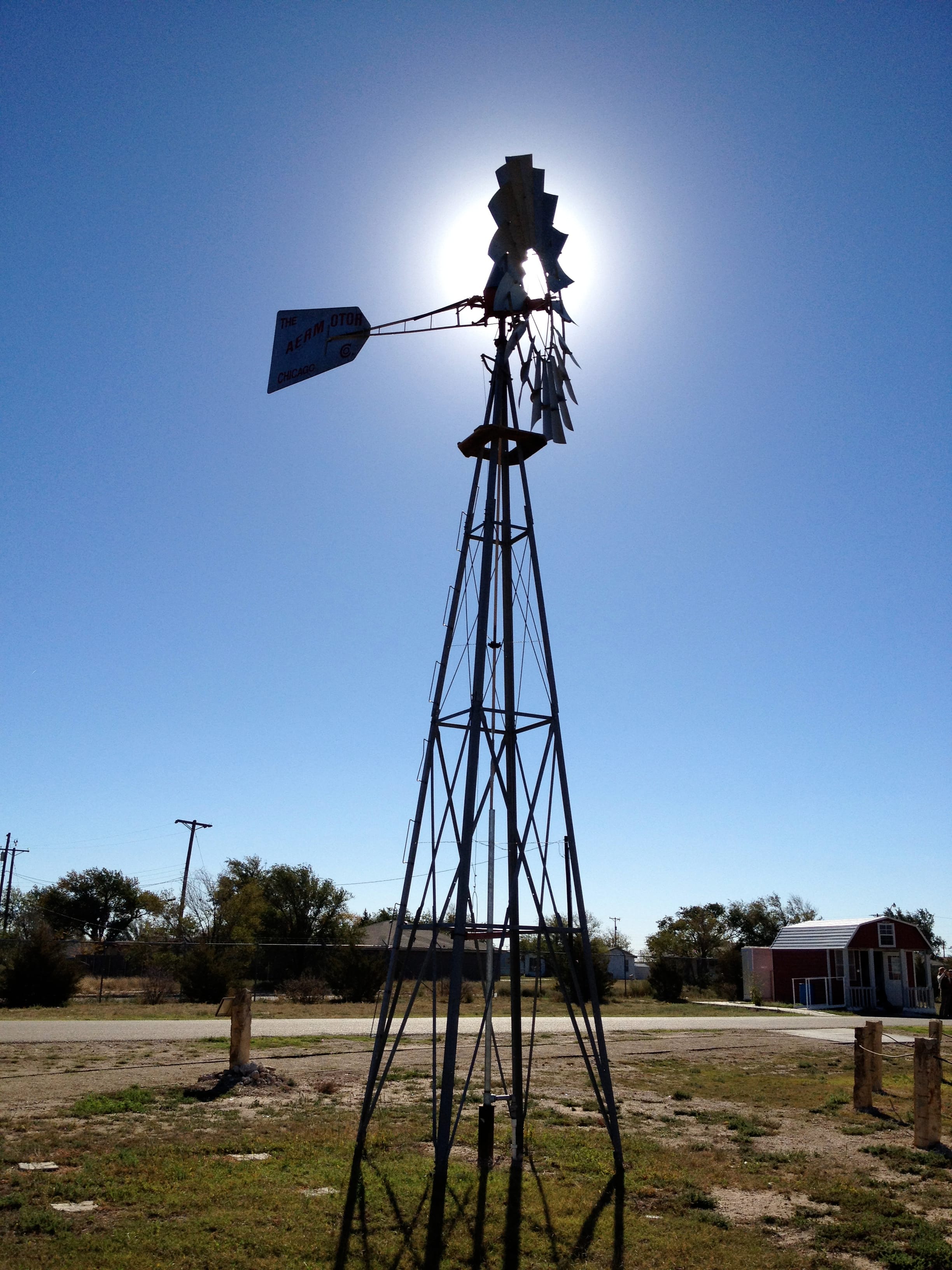
A windmill at the American Wind Power Center and Museum, another stop on our Texas wind-energy tour. Photo credit: David Ferris
Two weeks ago I decamped to Lubbock, Texas, for the 22nd annual conference of the Society of Environmental Journalists. A highlight of these conferences is fleeing the hotel for field trips to places I would never otherwise see. Last year, at the Miami conference, it was the Everglades; this year, it was the wind power installations on the plains of West Texas.
Our tour bus dropped in on Dusty Choate, a sales rep for Aermotor, the largest windmill manufacturer in the United States. Wait, windmills? Aren’t those relics from Holland, or maybe rusting behind a ranch somewhere in South Dakota? In fact the windmill business is alive — though not quite well. I just posted a story on Forbes about the prospects for the U.S. windmill industry, and its brightening opportunities on foreign shores.
Until one drives through West Texas, it’s hard to grasp just how littered with energy it is. At one point, I looked out the window to see, on a single stretch of flatland, the bobbing heads of pumpjacks, giant cylindrical storage tanks, the flames of gas flares, and looming behind all of that, a bank of towering white wind turbines.
Texas is blessed with every kind of energy. One can only hope that the state figures out how to transition from the underground fossil sort — the kind that is dangerously warming our atmosphere, and that will eventually run out — to forms of power that rely on the sun and wind that bless those endless plains.
The New York Times just published a story I wrote about the new science of solar forecasting. To track the clouds, scientists have developed new cameras that provide startling images of the sky. Click on the buttons to enjoy this slideshow.
[portfolio_slideshow]
All images are credited to Carlos Coimbra and Jan Kleissl at UC San Diego.
Years ago, on a backpacking trip in the Sierra Nevada mountains with my friend Eric, we stopped to rest in a lake basin beneath a giant blue sky. We had been in the backcountry long enough that our minds had unchained from the city, and it seemed obvious to ask Eric to name his favorite force of nature.
“Clouds,” he replied, as we gazed up into the sky where a few of them wandered lonely. “Because they’re the one force on Earth that Man can’t control.”
I’ve thought about Eric’s answer often, and especially in the last week or so while I reported a story for the New York Times on the new science of solar forecasting. The discipline could as easily call itself “cloud forecasting,” since that is the phenomenon that prompted its rise. As solar power has started to emerge as an important part of the energy grid, especially in California, the erratic flight path of clouds has turned from a topic of idle speculation into one of serious concern.
The lead subject of the story is Carlos Coimbra, a fluid engineer at the University of California at San Diego (coincidentally, my alma mater). He and another engineer, Jan Kliessl, have hit upon a way to track the path of clouds with far more accuracy than existing techniques. The innovation could save a lot of money for the companies that build and operate solar plants, as well as utilities and operators of the power grid, and even the homeowners and businesses that use electricity.
But the discovery may be even more significant in creating hyperlocal weather forecasts. The exact path of storm in the next hour is a matter of life and death for an airline pilot or a crew battling a forest fire. A fine-grained weather prediction could be invaluable to farmers who watch the sky for the next cloudburst that will water their crops, or the hailstorm that could ruin them.
I happened upon Coimbra’s and Kleissl’s work in 2010 while seeking a topic for the eco-technology column I write for Sierra magazine, and I ended up doing an entry about their discoveries. But the column didn’t provide enough space to explore the subject fully. Earlier this year I asked around again and found that government and private industry were waking up to the possibilities of a good cloud forecast.
We still can’t control the route that clouds take through the heavens, and I hope we never do. Like Eric, I prefer to live in a world that hovers beyond our complete control. But using our smarts to guess where clouds are going exhibits both cleverness and an admirable humility.
 Happy New Year, world, and let’s start things off with a ray of sunshine. My latest “Innovate” column in the January/February issue of Sierra magazine is about how engineers are employing biomimicry to increase the usefulness of solar power. The title: “Solar Designs from Nature.”